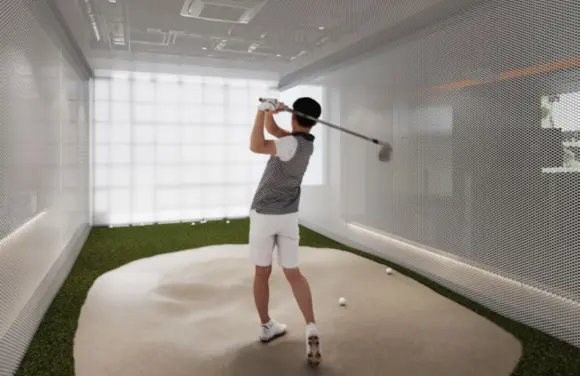

You finally found some time, drove to the course to have some fun, but got rained out while playing. This is one of the situations that every golfer knows about, the frustration of weather, daylight, tee times, and travel that consumes half of your play time. And this becomes precisely one of the reasons why buying a golf simulator has now shifted from a luxury purchase to a legitimate golf simulator investment for serious golfers.
But the main thing that needs notice is that simulators vary significantly in what they offer, how they perform, and what they cost. And choosing the wrong one not only means wasted money but also having something that either does not fit into the space, frustrates you with inaccurate readings, or lacks the software you actually want. Thus, here is a clear breakdown of the key factors you need to evaluate before committing to any golf simulator.
Why Golf Simulators Are Becoming Popular as an Investment?
The indoor golf simulator market has grown significantly, and for good reason. Modern systems now deliver ball flight data accurate to within one to two per cent of real-world results, high-definition course graphics, and professional-grade swing metrics that PGA Tour players themselves rely on for training. Also, beyond performance, a home golf simulator adds genuine utility to a space; a garage, basement, or dedicated room that might otherwise sit idle.
For those who start a commercial golf simulator business, the revenue potential through lessons, fittings, and pay-to-play sessions has made these systems a viable business asset. Also, the technology has become more accessible, as entry-level setups can be accessed in lower budgets, while premium builds scale into five figures for those who want the full experience.
Who Should Invest in a Golf Simulator?
A simulator works well for a range of users, not just elite players. Here are different categories of golfers who truly benefit from investing in a golf simulator to play, practice, and compete. If any of these sound familiar, you are likely a strong candidate for this investment.
- Recreational golfers: Those who want consistent practice without tee times or travel costs will find it transformative, especially in regions with long winters or unpredictable weather.
- Serious amateurs and competitive players: They benefit the most from the precise swing feedback and course management data.
- Golf coaches and instructors: They can use a commercial golf simulator to run lessons and fittings year-round from a single indoor location.
- Beginners: Practising in a private, low-pressure environment with the best golf simulator for beginners allows them to build swing fundamentals without the social anxiety of a driving range.
Key Factors to Consider While Investing in a Golf Simulator
No two simulator setups are the same, and the right one depends specifically on your personal goals, space, and how you plan to use it. And while investing in one, getting these factors right will save you from costly mistakes and will make sure that the system actually fits your life. Here is what to evaluate carefully.
Budget and Total Cost of Ownership
The sticker price of a launch monitor is rarely the full picture when it comes to golf simulator cost. Many buyers focus on one component, then discover the rest of the setup adds up quickly. A projector, a quality impact screen, a durable hitting mat, a golf simulator enclosure or net, and ongoing software subscriptions all contribute to the real total. Thus, your first step while planning to invest should always be to know how much a home golf simulator costs.
Accuracy and Tracking Technology
Golf simulator accuracy is the most technically important factor to understand before buying a golf simulator. And, checking specifically here, the accuracy of the golf simulator launch monitor is necessary as it is the engine of the entire system. What matters most here is whether the launch monitor measures the data points relevant to your goals. A system that only measures ball data is significantly less useful for swing improvement than one that captures club data as well. For a realistic golf simulator experience, do not compromise on this.
Space Requirements
| Quick Answer: Minimum recommended dimensions are 10 ft wide × 15 ft deep × 10 ft ceiling height. A 9 ft ceiling can work for shorter players using irons, but you will likely clip the ceiling on a driver swing. |
Golf simulator room size is often the first practical constraint people run into, and it is the one that can completely dictate which systems are even viable for you. Before evaluating any hardware, measure how much space you need for a golf simulator for your intended space carefully. Common locations include garages, basements, and dedicated studio builds. The key golf simulator setup requirements most people underestimate are depth, so measure before finalising.
Software and Course Library
The golf simulator software is what transforms raw launch data into an actual experience, so check its compatibility with your platform before purchasing. Consider the course library size, graphics quality, multiplayer options, and game improvement modes. A quality simulator like Golfzon Vision SP Plus provides access to 300+ courses with smart GDR Plus software. Best golf simulator features in software include driving range modes, shot-analysis overlays, and practice games that target specific weaknesses in your game.
Installation and Setup Complexity
Some simulators are designed to be set up with no professional help; others require electrical work, ceiling mounting, network configuration, and careful calibration. Some have portable launch monitors; others have overhead-mounted systems, or may require ceiling installation and precise positioning, which most buyers hire a professional to handle. So be honest about your DIY capability, and factor in installation costs if you plan not to do it yourself.
Build Quality and Durability
The golf simulator impact screen absorbs hundreds of full-speed golf shots per session, the hitting mat wears under repeated divot-style contact, and the enclosure frame needs to stay rigid over years of use. Premium golf simulator systems with high-quality impact screens use multi-layer construction with foam backing to absorb ball impact safely and maintain image clarity. Thus, when deciding on how to choose a golf simulator, start with finding one that’s built for durability.
Indoor vs Commercial Use Case
How you intend to use the simulator should shape every purchasing decision. A golf simulator for home use prioritises personal practice and entertainment, such as Golfzon Vision SP. Whereas a commercial golf simulator setup, by contrast, needs to handle high daily usage volume, accommodate golfers of different heights and handedness, and run reliably without constant recalibration.
Brand Reliability and Support
The golf simulator comparison landscape is crowded with brands ranging from well-established industry players to newer entrants with limited track records. When something goes wrong, and with any technology, something eventually does, you want a company that will actually respond. Check customer reviews not just for the product experience, but for the after-sales support experience specifically.
Common Mistakes to Avoid When Buying a Golf Simulator
Most buyers regret their simulator purchase for one of a handful of predictable reasons. Getting clear on these pitfalls before you spend anything is the most practical form of due diligence.
- Measuring only the ceiling height, not the full swing arc: Swing your driver in the space before buying anything. The top of your backswing is what matters, not your standing height.
- Budgeting only for the launch monitor: The enclosure, screen, projector, mat, and software often cost as much as the monitor itself. Model the full cost from the start.
- Ignoring software compatibility: Not every launch monitor works with every simulation platform. Verify compatibility before purchasing either component.
- Choosing radar technology for a tight space: Radar-based systems need significant depth behind the golfer. In compact rooms, camera-based systems are the correct choice.
- Skipping calibration after setup: Even premium systems can produce inaccurate data if not properly calibrated. Hence, follow the manufacturer’s setup protocol in full.
- Overlooking lighting conditions: Windows & overhead lights can interfere with camera-based sensors and wash out projector images. So, plan your lighting before finalising placement.
Conclusion
A golf simulator is one of the most practical investments a golfer can make, but only when matched to the right space, budget & use case. The factors covered here are not a golf simulator buying checklist to rush through; they are a framework that separates a setup you will use for a long time from one that you regret. Take your time with the space measurements, be honest about your budget, including all components, and prioritise accuracy and software compatibility above surface-level features. If you are ready to explore premium simulator options built for serious golfers, GTBent offers a curated range of systems worth considering.